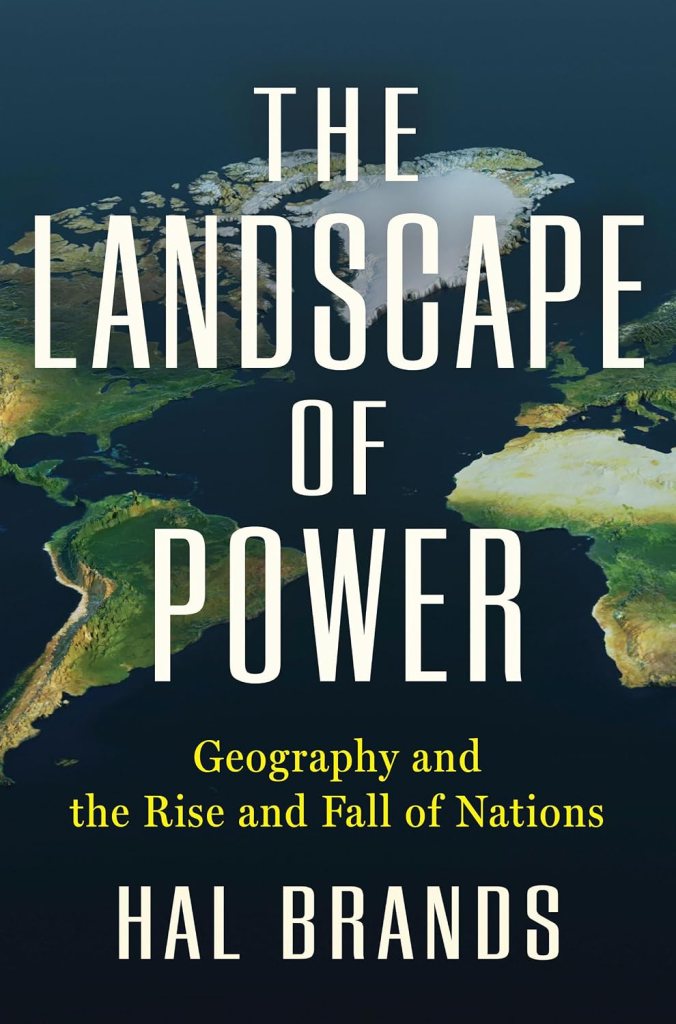
The Landscape of Power: Geography and the Rise and Fall of Nations
Authored by Hal Brands, 2027
A vital exploration of international conflict and world affairs, through the lens of a timeless force: geography.
The world is a battleground again. Across continents and oceans, the great-power peace that followed the Cold War is over: Russia threatens to expand; America’s global leadership is in question; China exercises its soaring ambitions on land and sea. The Landscape of Power shows that navigating this new moment will require embracing the strategic power of geography—that most timeless, unforgiving force in global affairs. From the unique position of Ukraine—at the crossroads of a resource-rich Eurasian heartland, an economically dynamic Europe, and a commanding perch on the Black Sea—to oceanic chokepoints from the South China Sea to the Strait of Hormuz, historian Hal Brands carries readers across the tumultuous global landscape to shed light on today’s fundamental strategic quandaries. At the opening of a new age of turbulence, The Landscape of Power revives a geographical way of thinking—and offers a guide to navigating the trying times ahead.
Purchase The Landscape of Power:
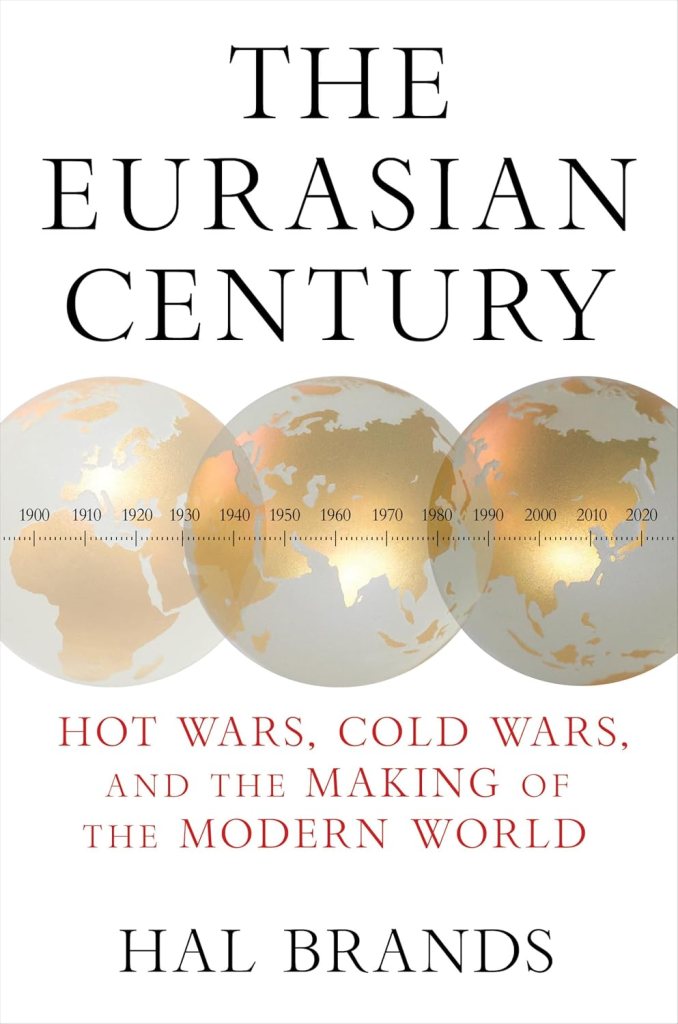
The Eurasian Century: Hot Wars, Cold Wars, and the Making of the Modern World
Authored by Hal Brands, 2025
One of Foreign Policy’s Most Anticipated Books of 2025. An urgent and incisive new framework for understanding the origins—and stakes—of global conflict with China, Russia, and Iran.
We often think of the modern era as the age of American power. In reality, we’re living in a long, violent Eurasian century. That giant, resource-rich landmass possesses the bulk of the global population, industrial might, and potential military power; it touches all four of the great oceans. Eurasia is a strategic prize without equal—which is why the world has been roiled, reshaped, and nearly destroyed by clashes over the supercontinent. Since the early twentieth century, autocratic powers—from Germany under Kaiser Wilhelm II to the Soviet Union—have aspired for dominance by seizing commanding positions in the world’s strategic heartland. Offshore sea powers, namely the United Kingdom and America, have sought to make the world safe for democracy by keeping Eurasia in balance. America’s rivalries with China, Russia, and Iran are the next round in this geopolitical game. If this new authoritarian axis succeeds in enacting a radically revised international order, America and other democracies will be vulnerable and insecure.
Hal Brands, a renowned expert on global affairs, argues that a better understanding of Eurasia’s strategic geography can illuminate the contours of rivalry and conflict in today’s world. The Eurasian Century explains how revolutions in technology and warfare, and the rise of toxic ideologies of conquest, made Eurasia the center of twentieth-century geopolitics—with pressing implications for the struggles that will define the twenty-first.
Purchase The Eurasian Century:
The New Makers of Modern Strategy: From the Ancient World to the Digital Age
Edited by Hal Brands, 2023
The New Makers of Modern Strategy is the next generation of the definitive work on strategy and the key figures who have shaped the theory and practice of war and statecraft throughout the centuries. Featuring entirely new entries by a who’s who of world-class scholars, this new edition provides global, comparative perspectives on strategic thought from antiquity to today, surveying both classical and current themes of strategy while devoting greater attention to the Cold War and post-9/11 eras. The contributors evaluate the timeless requirements of effective strategy while tracing the revolutionary changes that challenge the makers of strategy in the contemporary world. Amid intensifying global disorder, the study of strategy and its history has never been more relevant.
The New Makers of Modern Strategy draws vital lessons from history’s most influential strategists, from Thucydides and Sun Zi to Clausewitz, Napoleon, Churchill, Mao, Ben-Gurion, Andrew Marshall, Xi Jinping, and Qassem Soleimani. It also includes contributions from over forty top-tier global scholars like Francis J. Gavin, Thomas G. Mahnken, Thomas Rid, and Kori Schake.
Purchase The New Makers:
Danger Zone: The Coming Conflict with China
Authored by Hal Brands and Michael Beckley, 2022
A provocative and urgent analysis of the U.S.–China rivalry.
It has become conventional wisdom that America and China are running a “superpower marathon” that may last a century. Yet Hal Brands and Michael Beckley pose a counterintuitive question: What if the sharpest phase of that competition is more like a decade-long sprint?
The Sino-American contest is driven by clashing geopolitical interests and a stark ideological dispute over whether authoritarianism or democracy will dominate the 21st century. But both history and China’s current trajectory suggest that this rivalry will reach its moment of maximum danger in the 2020s.
China is at a perilous moment: strong enough to violently challenge the existing order, yet losing confidence that time is on its side. Numerous examples from antiquity to the present show that rising powers become most aggressive when their fortunes fade, their difficulties multiply, and they realize they must achieve their ambitions now or miss the chance to do so forever. China has already started down this path. Witness its aggression toward Taiwan, its record-breaking military buildup, and its efforts to dominate the critical technologies that will shape the world’s future.
Over the long run, the Chinese challenge will most likely prove more manageable than many pessimists currently believe—but during the 2020s, the pace of Sino-American conflict will accelerate, and the prospect of war will be frighteningly real. America, Brands and Beckley argue, will still need a sustainable approach to winning a protracted global competition. But first, it needs a near-term strategy for navigating the danger zone ahead.
Purchase Danger Zone:
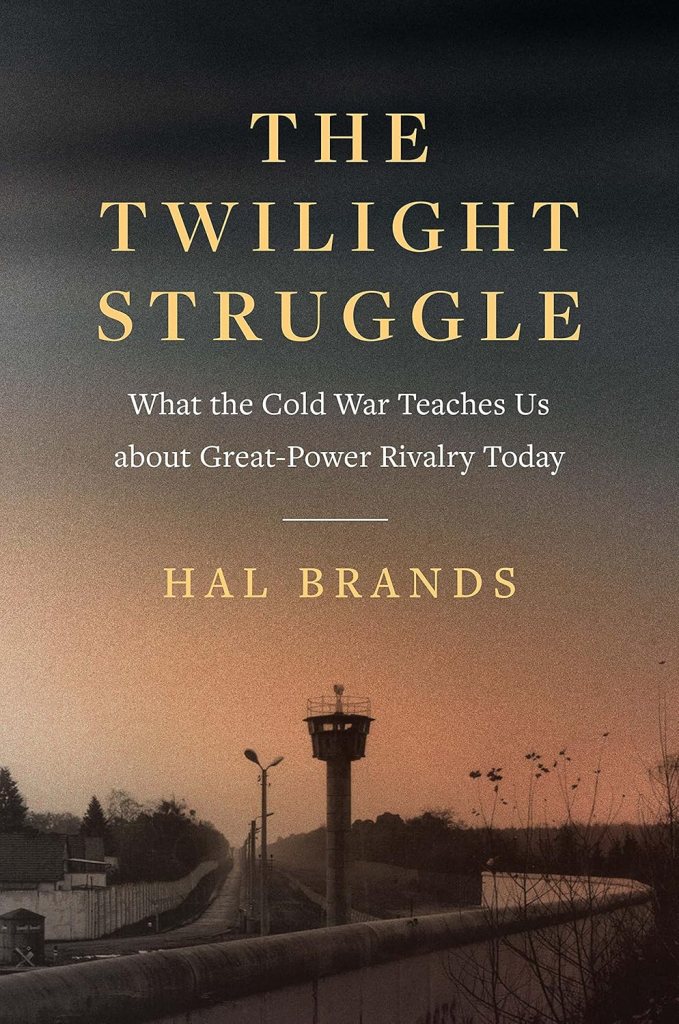
The Twilight Struggle: What the Cold War Teaches Us about Great-Power Rivalry Today
Authored by Hal Brands, 2022
A leading historian’s guide to great-power competition, as told through America’s successes and failures in the Cold War.
America is entering an era of long-term great power competition with China and Russia. In this innovative and illuminating book, Hal Brands, a leading historian and former Pentagon adviser, argues that America should look to the history of the Cold War for lessons on how to succeed in great-power rivalry today.
“There is an undeniable ease and fluidity to Mr. Brands’s narrative, and his use of Cold War archives is impressive.” —A. Wess Mitchell, Wall Street Journal
“If you want to know how America can win today’s rivalries with Russia and China, read this book about how it triumphed in another twilight struggle: the Cold War.” —Stephen J. Hadley, national security adviser to President George W. Bush
Purchase The Twilight Struggle:
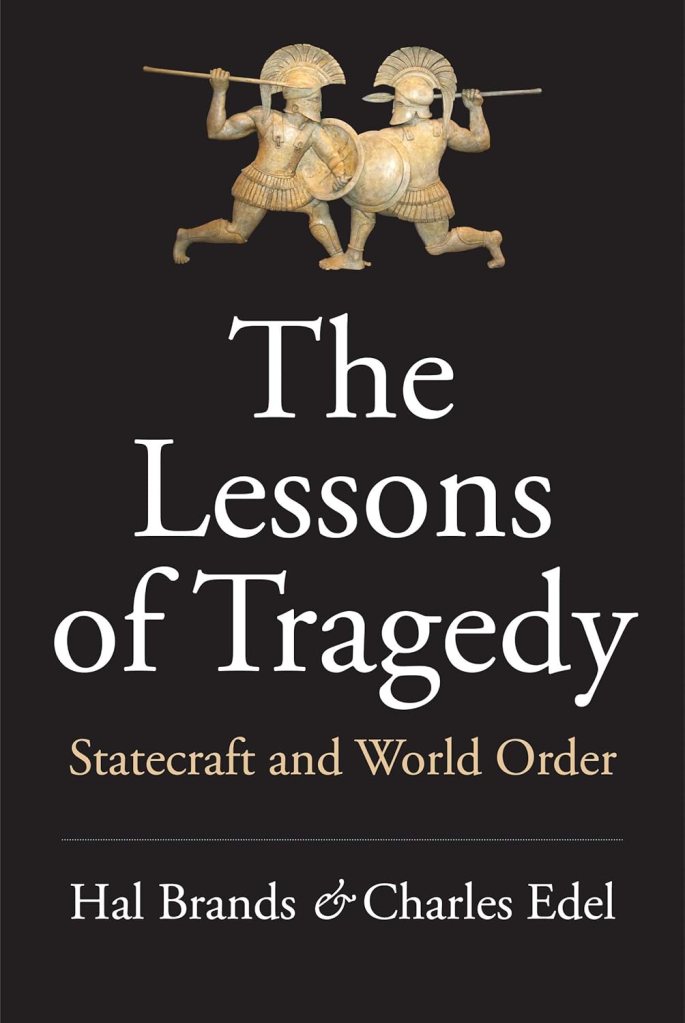
The Lessons of Tragedy: Statecraft and World Order
Authored by Hal Brands and Charles Edel, 2019
An eloquent call to draw on the lessons of the past to address current threats to international order.
The ancient Greeks hard‑wired a tragic sensibility into their culture. By looking disaster squarely in the face, by understanding just how badly things could spiral out of control, they sought to create a communal sense of responsibility and courage—to spur citizens and their leaders to take the difficult actions necessary to avert such a fate. Today, after more than seventy years of great‑power peace and a quarter‑century of unrivaled global leadership, Americans have lost their sense of tragedy. They have forgotten that the descent into violence and war has been all too common throughout human history. This amnesia has become most pronounced just as Americans and the global order they created are coming under graver threat than at any time in decades.
In a forceful argument that brims with historical sensibility and policy insights, two distinguished historians argue that a tragic sensibility is necessary if America and its allies are to address the dangers that menace the international order today. Tragedy may be commonplace, Brands and Edel argue, but it is not inevitable—so long as we regain an appreciation of the world’s tragic nature before it is too late.
Purchase The Lessons of Tragedy:
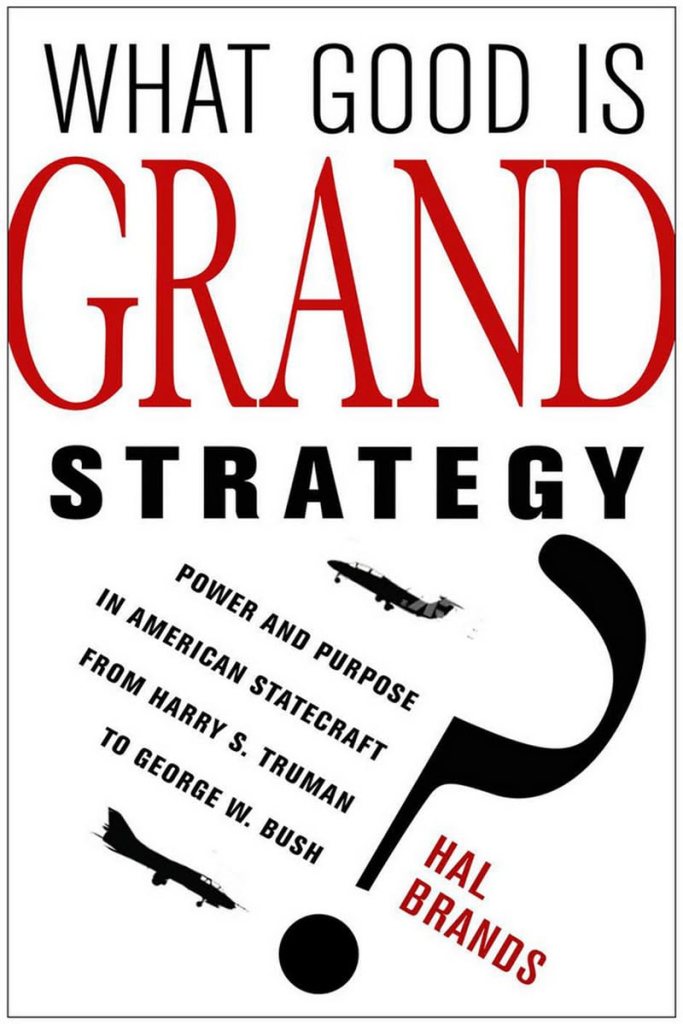
What Good Is Grand Strategy?
Authored by Hal Brands, 2014
Grand strategy is one of the most widely used and abused concepts in the foreign policy lexicon. In this important book, Hal Brands explains why grand strategy is a concept that is so alluring—and so elusive—to those who make American statecraft. He explores what grand strategy is, why it is so essential, and why it is so hard to get right amid the turbulence of global affairs and the chaos of domestic politics. At a time when “grand strategy” is very much in vogue, Brands critically appraises just how feasible that endeavor really is.
Brands takes a historical approach to this subject, examining how four presidential administrations, from that of Harry S. Truman to that of George W. Bush, sought to “do” grand strategy at key inflection points in the history of modern U.S. foreign policy. As examples ranging from the early Cold War to the Reagan years to the War on Terror demonstrate, grand strategy can be an immensely rewarding undertaking—but also one that is full of potential pitfalls on the long road between conception and implementation.
Brands concludes by offering valuable suggestions for how American leaders might approach the challenges of grand strategy in the years to come.
Purchase What Good is Grand Strategy:
Hal Brands, Website Built with WordPress

